
An institution’s learning platform should change as its teaching changes. Yet buying an LMS often means accepting a supplier’s assumptions about how education works.
AI raises the stakes. New ways to create courses, support learners and organise work are useful only if the platform can accommodate them.
Open-source Moodle, combined with well-integrated AI, offers a strategic edge for organisations with distinctive learning models: greater freedom to adapt as their needs change.
The feature list is the wrong contest
Proprietary LMSs can do AI. D2L’s Lumi suite, for example, includes AI-assisted content creation and learner support. A commercial platform can serve an organisation well when its capabilities fit.
The difference appears when they do not. An institution may need support inside a particular lesson, a specialised academic workflow or an AI provider with different language, cost or data arrangements.
Proprietary platforms may support those requirements through settings, integrations or agreements. But the supplier controls changes to the closed core. Anything outside its available options requires negotiation, a workaround or a wait.
With open-source Moodle, a capable team can inspect and extend the software. The institution can decide whether a feature is worth building.
Why AI makes openness more valuable
The opportunity is practical: a learner can discuss a lesson in a familiar language and continue the conversation next time. A course team can turn approved source material into a draft shaped around its teaching structure, ready for expert review.
Both depend on context, permissions and teaching practice. Access to an AI model is only part of the work; control over how it participates in learning matters just as much.
Moodle’s AI provider framework supports multiple providers and configurable instances for different tasks. It does not supply a complete contextual tutor or make every model interchangeable, but it provides a basis for provider choice.
An organisation can evaluate new AI services against its teaching, language and governance requirements. Its LMS choice need not become a permanent commitment to one provider.
Moodle can be the foundation without defining every screen
Moodle is often judged by an interface someone used years ago. Its more enduring value is the learning system beneath that interface.
Headless Moodle separates the learner-facing screens from the system behind them. Moodle can manage agreed functions such as enrolments, course records and progress while a separate interface supports the institution’s learning model.
Moodle’s web services let other systems access its underlying functions. Coverage needs checking: some activities and integrations require additional work. The opportunity is to reuse established learning functions while changing how people encounter them.
Three ways to shape the learner experience
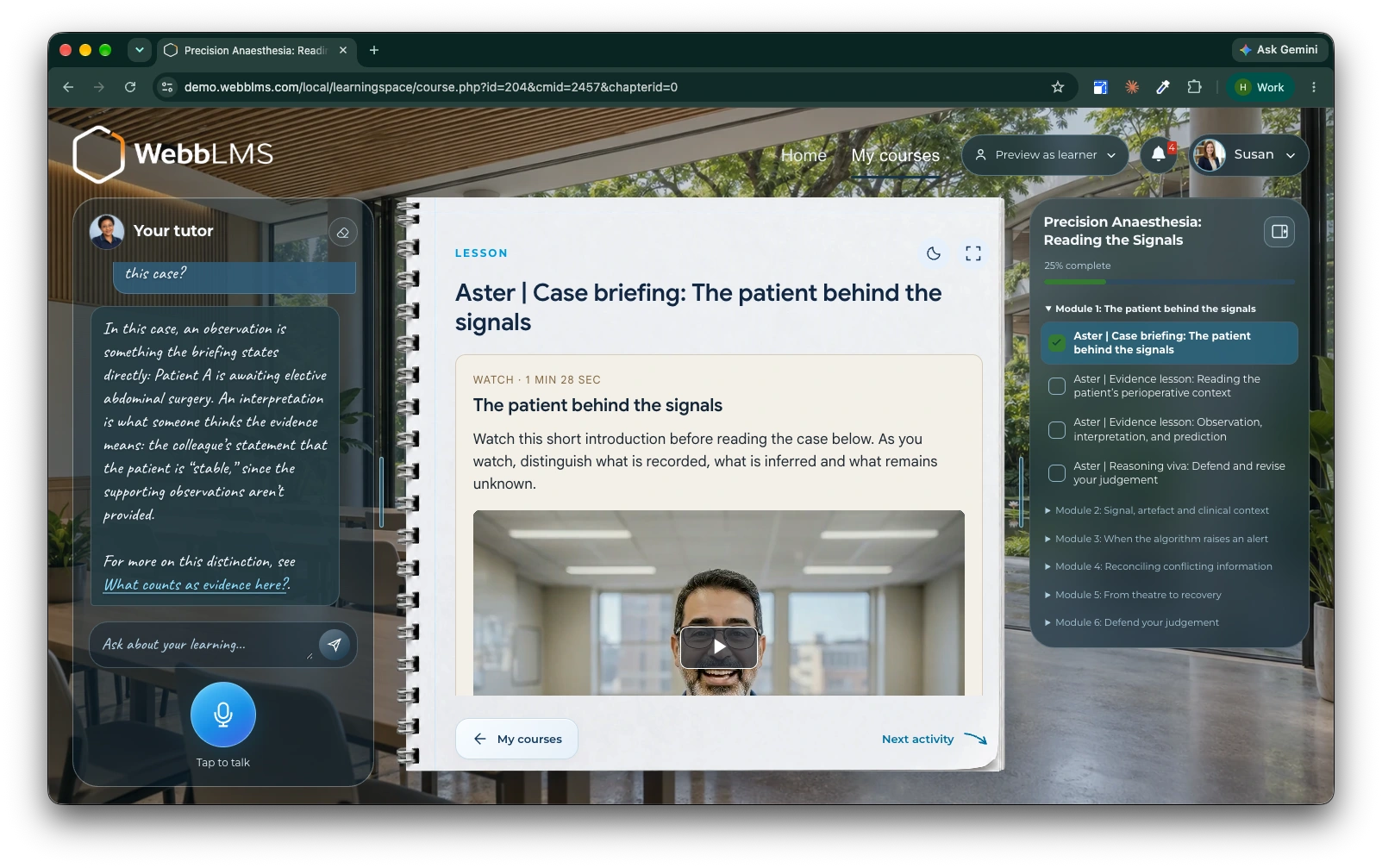
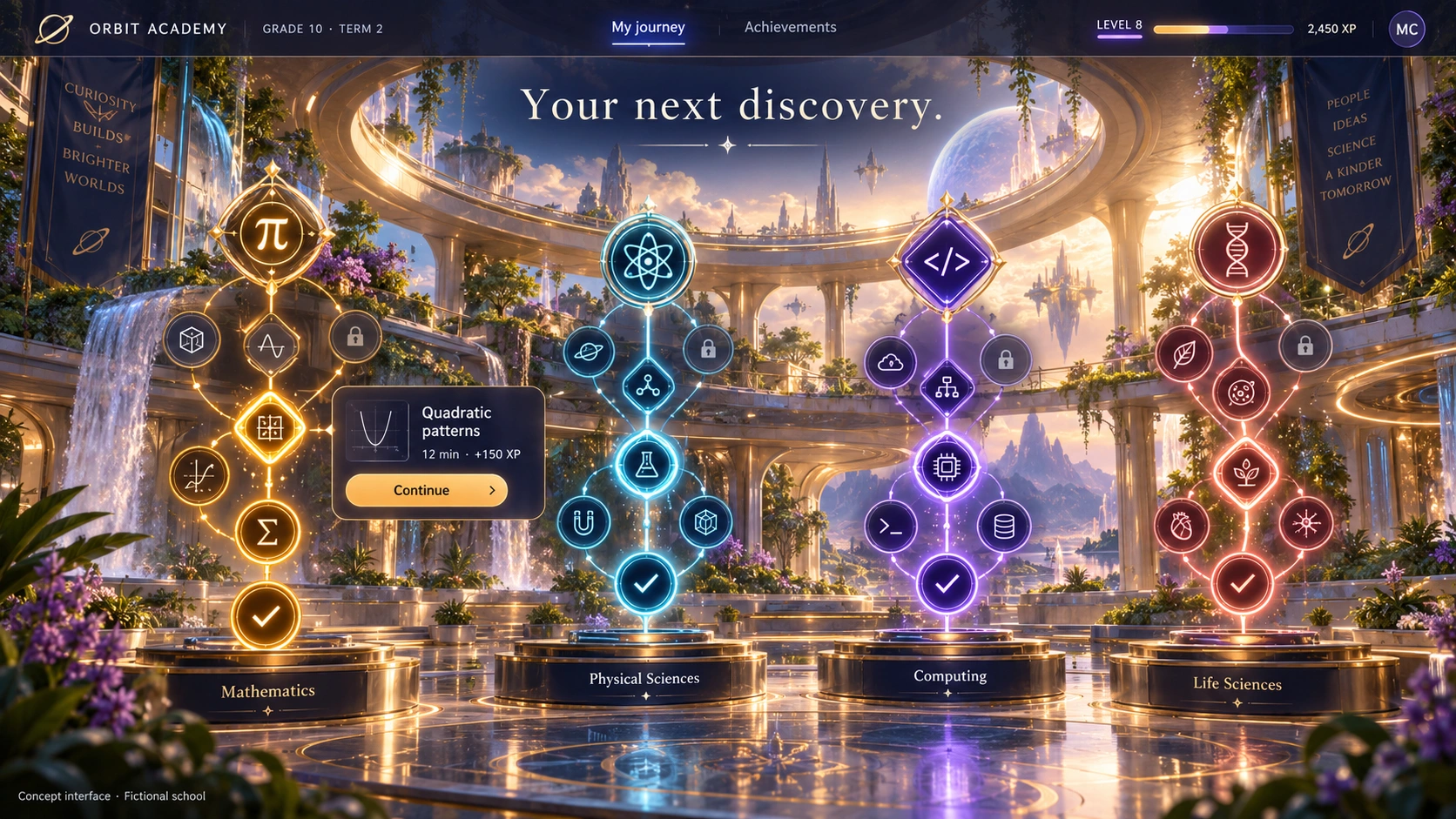
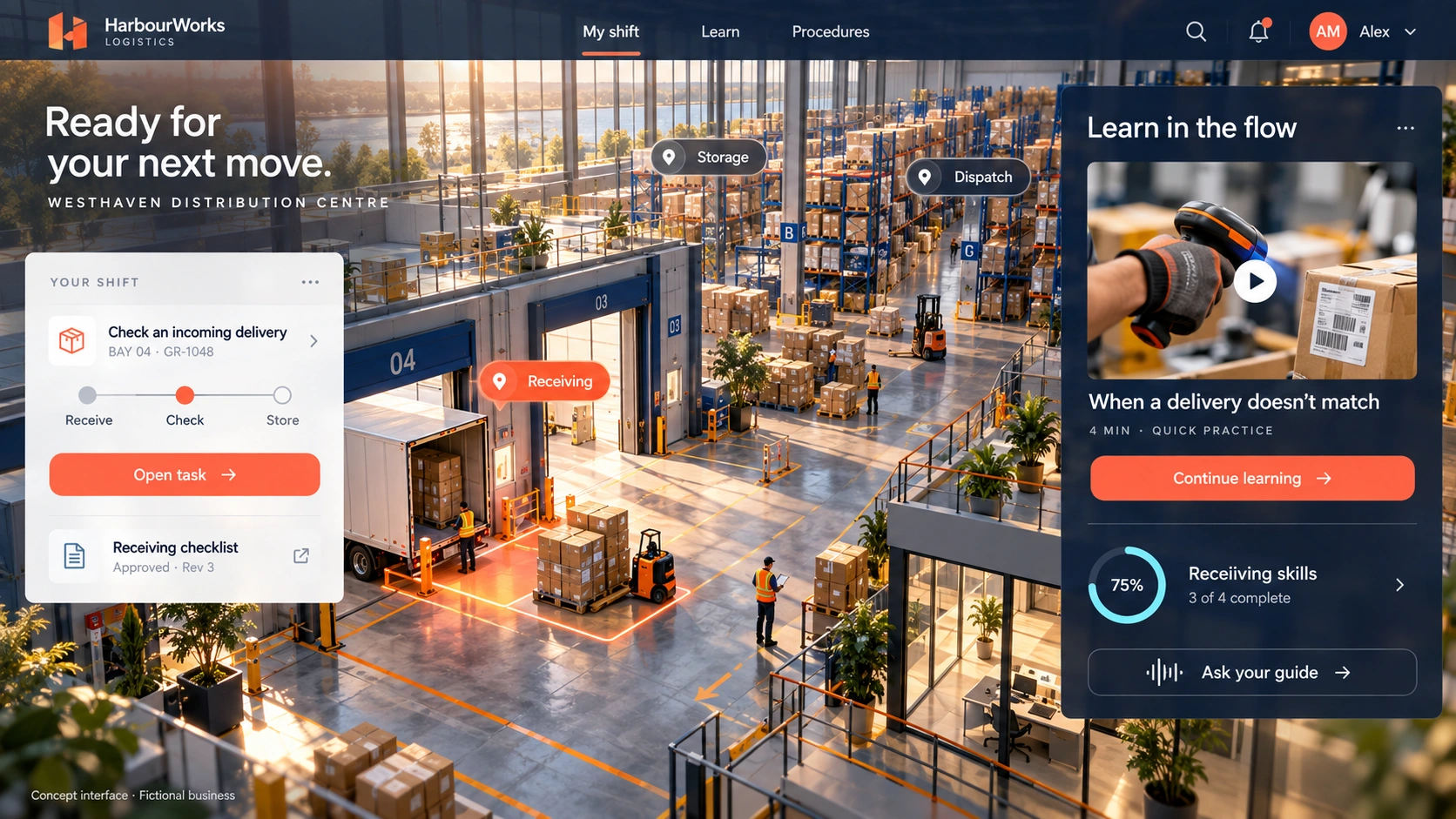
The first example is a working demonstration; the next two are proposed interfaces. They illustrate choices about the learning experience, rather than evidence of a particular technical architecture.
Support beside the lesson
A visible path through the curriculum
Learning where the work happens
Headless architecture is one option, not a prerequisite for AI. A theme or integrated extension may achieve the same result with less maintenance. The advantage is having a choice.
Custom should mean purposeful, not rebuilt from scratch
Custom software can become expensive, fragile and dependent on its original developer. Purposeful customisation limits that risk.
Standard capabilities should remain where they work. Extensions should address a meaningful learning or operational need, use documented connections and reusable components, and be tested through platform updates. A different learner interface need not mean rebuilding enrolment, assessment and reporting.
The test is whether an improvement is worth maintaining. A clearer route through a complex programme may be; a cosmetic variation that creates years of upkeep may not.
Professional management remains essential: hosting, security, performance, accessibility and dependable support. Access to the code creates options; an accountable team makes them usable.
Control is a business advantage
Moodle’s open-source licence permits modification and redistribution under its terms. The software remains available to inspect and maintain beyond a particular supplier relationship. That freedom depends on sound contracts, documentation, data access and maintainable extensions; open source alone does not prevent dependence.
Done well, this gives an institution room to retain what works, replace components and bring in different expertise. AI expands the possibilities for learning support. Open source provides the freedom to integrate them. Headless architecture, where justified, extends that freedom to the learner experience.
For institutions prepared to invest in good implementation, that adaptability is Moodle’s strategic edge. A feature can win today’s demonstration. The ability to respond when teaching needs change is the stronger long-term advantage.