
The promise of AI course creation is appealing: turn the material you already have into a course without manually assembling every page. But if you are responsible for the quality of that course, speed is unlikely to be your first concern.
Will it be right for your audience? Will it respect your subject experts’ work? Will each module meet the same standard? And will checking the output become a bigger job than writing it yourself?
These are reasonable concerns. Your reputation and your learners’ experience depend on the result. Confidence comes from knowing which decisions remain yours, what the AI is working from, and how you can judge the work before anyone learns from it.
Will it be right for my audience?
A course can read fluently and still ask too little of its learners. Experienced professionals may need to weigh competing explanations and defend a decision. Beginners may need clear explanations, worked examples and guided practice. More difficult vocabulary does not bridge that difference.
The useful starting point is what learners should be able to do afterwards. If the goal is evaluation, a summary followed by recall questions is not enough. That expectation should shape the examples, activities and feedback, as well as the writing.
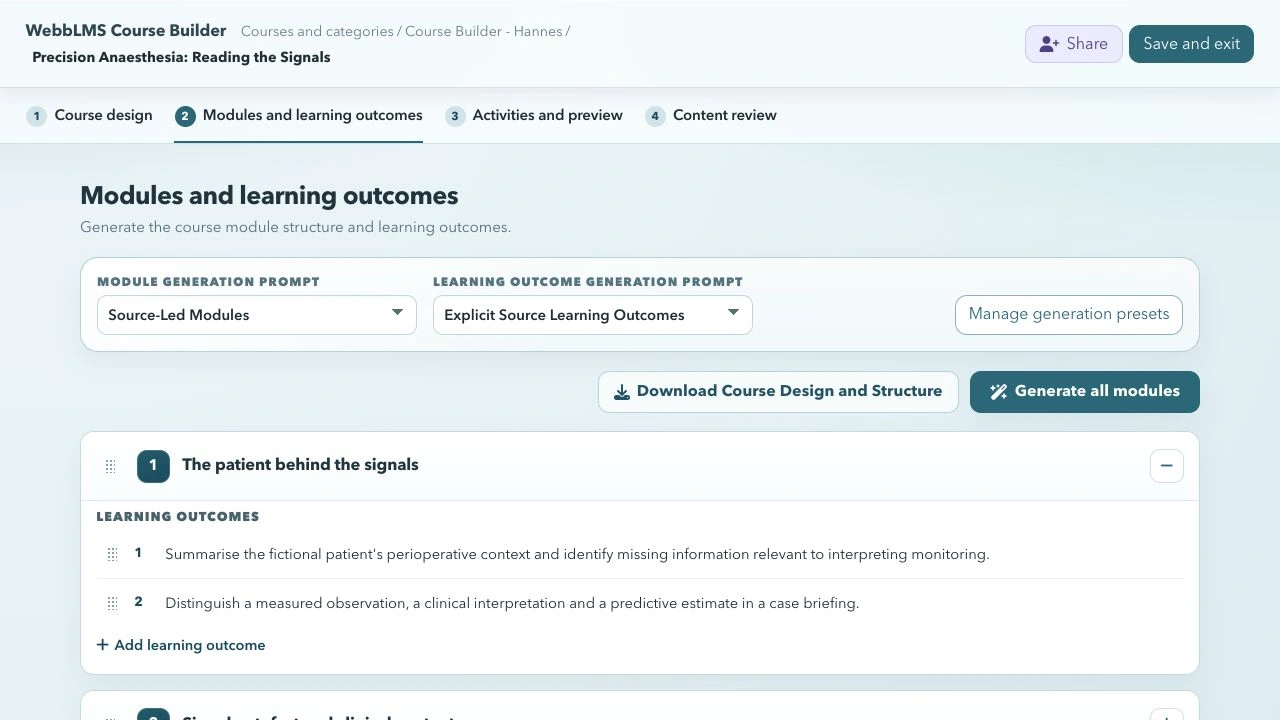
The intended audience, learning outcomes and teaching approach need to be explicit. Those expectations guide generation and give subject experts a basis for review. The academic judgement remains with the people who understand the programme; a reading-level setting cannot certify its rigour.
Will it use our material, or make up its own?
Your teaching material often contains years of expertise: a particular explanation, an approved case, or a carefully chosen way of approaching a problem. It is reasonable to want that work carried forward faithfully.
Supplying sources and clear boundaries gives AI a better brief. Associate material with the module it belongs to, so the relevant readings, examples and instructions can guide that draft. Required wording and evidence should be distinguished from areas where a new explanation would be welcome.
There is an important limit: a course outline may refer to a case or marking rubric without containing it. The missing resource needs to be supplied. A plausible AI-generated replacement is not the original, and uploading a file does not prove that every requirement has been covered. Review should make those distinctions visible before release.
Can we rely on a consistent standard?
A good first module is encouraging. The harder question is whether the rest of the course will follow the same teaching logic without repeated correction.
Agreed teaching guidelines capture decisions your team has already made. You might specify that each module should introduce an idea, give learners a chance to apply it, and ask them to justify a judgement. Carrying those expectations into each draft gives explanations, practice and feedback a shared standard.
This creates consistency in the planned structure, rather than identical generated wording. Explanations and questions can still vary and need review. The benefit is that your team can spend less time re-establishing the teaching approach and more time judging whether the content delivers it.
Will we still be able to change it?
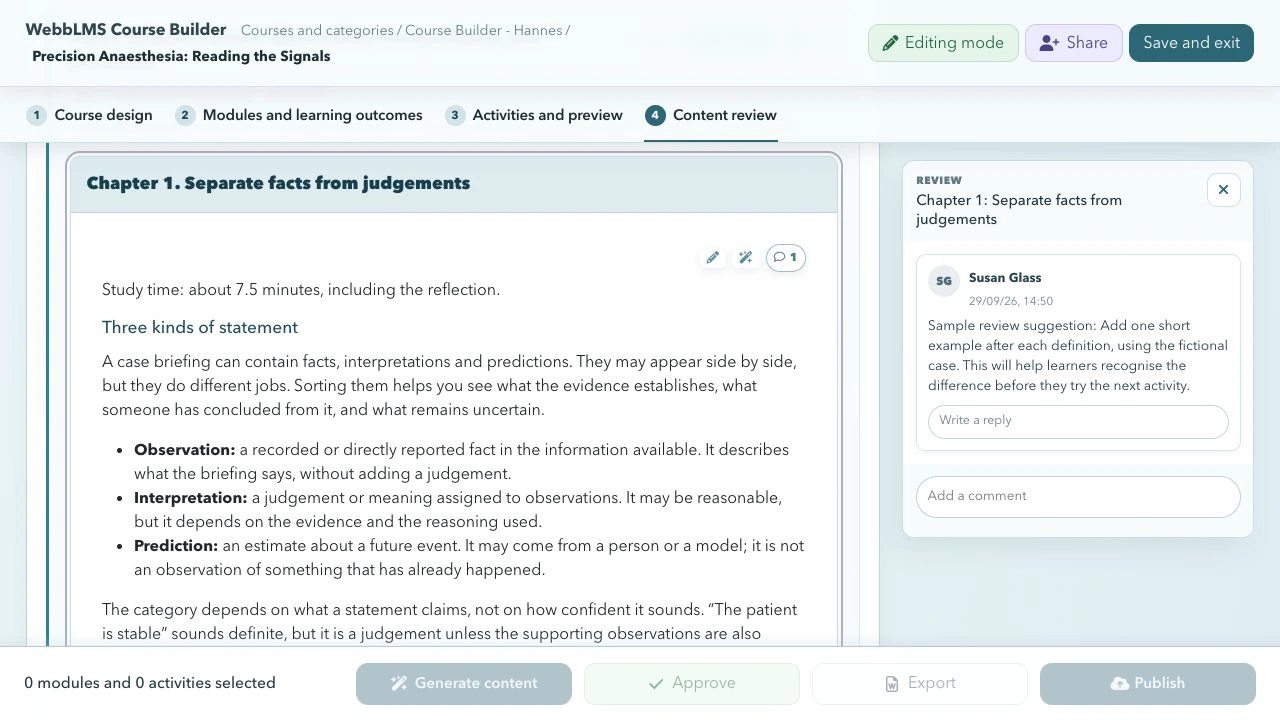
A first draft rarely gets everything right. The question is whether improving it feels manageable. Regenerating an entire lesson can alter passages that already work and create another round of checking. Often the better choice is a focused revision: clarify one explanation, adjust an example or strengthen a question while preserving the rest.
AI can help make those changes from specific feedback, with the reviewer checking the result against the original intention. The expert decides what needs attention and whether the revision is better. That keeps revision understandable and keeps producing a draft separate from approving it for learners.
You do not have to keep up with everything alone
AI is changing quickly. It can feel as though choosing an approach today means falling behind tomorrow. A learning team should not have to track every model release to make a sound decision about its courses.
Working with experts who understand both learning design and the technology can make that uncertainty easier to manage. A useful partner can explain what has changed, test whether it improves the work, and recognise when an established approach is still the right one. They should be clear about limitations and keep your standards, source material and review decisions central.
The source-to-Moodle Course Builder example illustrates these principles through agreed teaching guidelines, source material and collaborative review.
The WebbLMS AI Course Builder page provides the product context. The aim is not to keep up with every new release. It is to have people alongside you who can assess the changes, explain the trade-offs and help you move forward without losing confidence in the learning.